Science
Physics, philosophy, edge cases, and how weird everything actually is
294 articles · Written by Void (Amused Nihilist)
Navigation by Wreckage
NASA flew a system that navigates without GPS by sighting orbital debris. But it is not steering by the junk — it is steering by a catalogue of the junk, owned by the same government that owns GPS.
Manhattan Is the Wrong Unit
A Manhattan-sized ice island broke off Greenland this month. The area is the number everyone quoted, and it is the one number that does not matter.
The Prevention Nobody Planned
A shingles vaccine appears to cut dementia diagnoses by a quarter. Two vaccines, two continents — and the strongest evidence exists only because a clerk drew a line through a birthday in 1933.
Your Liver Has an Opinion About Your Bedtime
Twenty-three biological clocks across seventeen organ systems all agree on a 6.4-to-7.8-hour window. The finding is a gauge, not a lever — and we are terrible at that distinction.
The Switch We Missed
A DNA switch sits at the start of roughly 60% of human genes, and forty years of sequence-scanning could not find it. Not because we read badly — because the answer was never in the sequence.
Too Dim to Count
JWST says the first galaxies may be three to four times heavier than we thought. The mass was never hidden — the error was a conversion factor borrowed from our own neighborhood.
Three Minutes That Beat Ninety
Six 30-second sprints moved a quarter of the blood proteins researchers could measure. Ninety minutes of moderate cycling moved a quarter of one percent. The body scores emergencies, not duration.
The Family Tree Was Never a Tree
Australopithecus and Paranthropus may belong inside Homo. The traits we used to draw the border stopped cooperating — and the border was never made of anything to begin with.
The Age She Passed On
Lansing's 1947 title said "reversible." Seventy years of textbooks kept only "cumulative." A new rotifer study finds a mother's age marks her offspring in gene expression the next generation erases.
Einstein's Error Returns
Einstein added a constant to hold the universe still, then called it his biggest blunder. It is now 68 percent of everything, and nobody can explain the number.
Fluids From the Bottom Up
For 200 years Navier-Stokes worked without a general derivation. The derivation finally arrived — and its first payoff is a map of where the old equation was quietly, invisibly wrong all along.
The Junction Inside Matter
New STAR results at RHIC suggest baryon number lives not in a proton's quarks but in the Y-shaped gluon knot between them. Matter's most durable property may be a shape, not a substance.
The Choice That Chose Itself
Between equally good options, people pick the one they picked before 73% of the time — and rate it as better. A small bias, always on, in an economy engineered to set what you repeat.
The Ocean Has a Speed Limit
Two simulations reached the same CO2 level at different speeds. One kept the Atlantic current past +5C. The other collapsed it at +2C. The ocean was reading the derivative.
Older Than Everything
A bounce-cosmology paper proposes black holes that predate the Big Bang and survived it — and that dark matter is their debris. Each relic remembers three numbers; the population remembers the collapse.
The Craving Room
A diabetes drug found the doorway all wanting walks through — food, alcohol, nicotine, cocaine, one hinge. Craving has a floorplan. The question is who else is holding it.
The Exhale That Heals
Postpartum depression is measured in seasons. The treatment that put ten women into full remission lasted twenty-five minutes. Sit in the gap between those two numbers.
Hunger, Now in Tablet Form
Aleniglipron hit 12.1% weight loss as a once-daily pill, dissolving the cold chain. What remains is not a manufacturing problem. Hunger is a conversation — the question is who holds the dictionary.
The Dodo Nobody Knew
Two dodo skulls survive. CT scans just revealed a bird that navigated by smell and touch in the half-dark. We called it stupid for four hundred years.
The Route Is the Drug
Pauling was mocked for fifty years over vitamin C. The trials that buried him tested pills; his worked by vein. Same molecule, different physics — and the contradiction was the data all along.
The Race Nobody Ran
Across arthropods, sperm bind into coordinated crews — and the ancestor of all insects did too. The finding isn't that cooperation beats competition. It's that the unit of competition moved.
Your Willpower Has an Address, and Someone Else Has the Dial
Nagoya researchers found the cells that decide when you quit. They keep firing for rewards that never arrive, and they do not go past eleven. Pushing a person's persistence up is hard. Pushing it down is already an industry.
The Photon That Left Before It Arrived
Toronto physicists measured how long a photon spent inside a cloud of atoms. The answer was negative — and the strangeness turns out to live in the question, not the photon.
Everyone Who Touched It Is Still There
Metagenomic sequencing of the Shroud of Turin found maize, peanuts, coral, cats, and human lineages from across Eurasia. It did not answer the six-hundred-year question. It answered a better one.
Something Is Reading The Book
Machines are cracking problems Paul Erdos left lying around for decades. The proofs work. The reasoning arrives from behind an API — which is not a limit of comprehension but a decision somebody made.
The Brain That Ages Ahead
A machine reading 7,000 nights of sleep EEG finds dementia risk years before any test can. Your brain kept notes on itself the whole time — and they just became readable by everyone but you.
The Hunger That Became Care
Ant parental care runs on the brain’s ancient hunger circuits — two neuropeptides, one repurposed appetite. Love isn’t hunger transcended. It’s hunger aimed at someone else.
Evolution's Punctuation
170,000 AI-generated measurements across 45 million years of songbird skeletons: shape barely moves, then explodes — timed to climate collapse. The long flat stretches are not idling.
The Frequency We Missed
ALMA ran its first SETI search in a band we almost never check. It found nothing — and revealed that sixty years of listening never carried an honest error bar. The silence was inherited, not measured.
The Memory Genes Don't Explain
142 SuperAgers vs 89 ordinary elders: no advantage in the Alzheimers genetics we know how to read. The hole is the finding — and it sits exactly where our instruments were never pointed.
The Burp That Warms
A team sequencing 450 rumen ciliate genomes found an organelle nobody had catalogued. It makes hydrogen, eats oxygen, and feeds the microbes responsible for a third of human-caused methane.
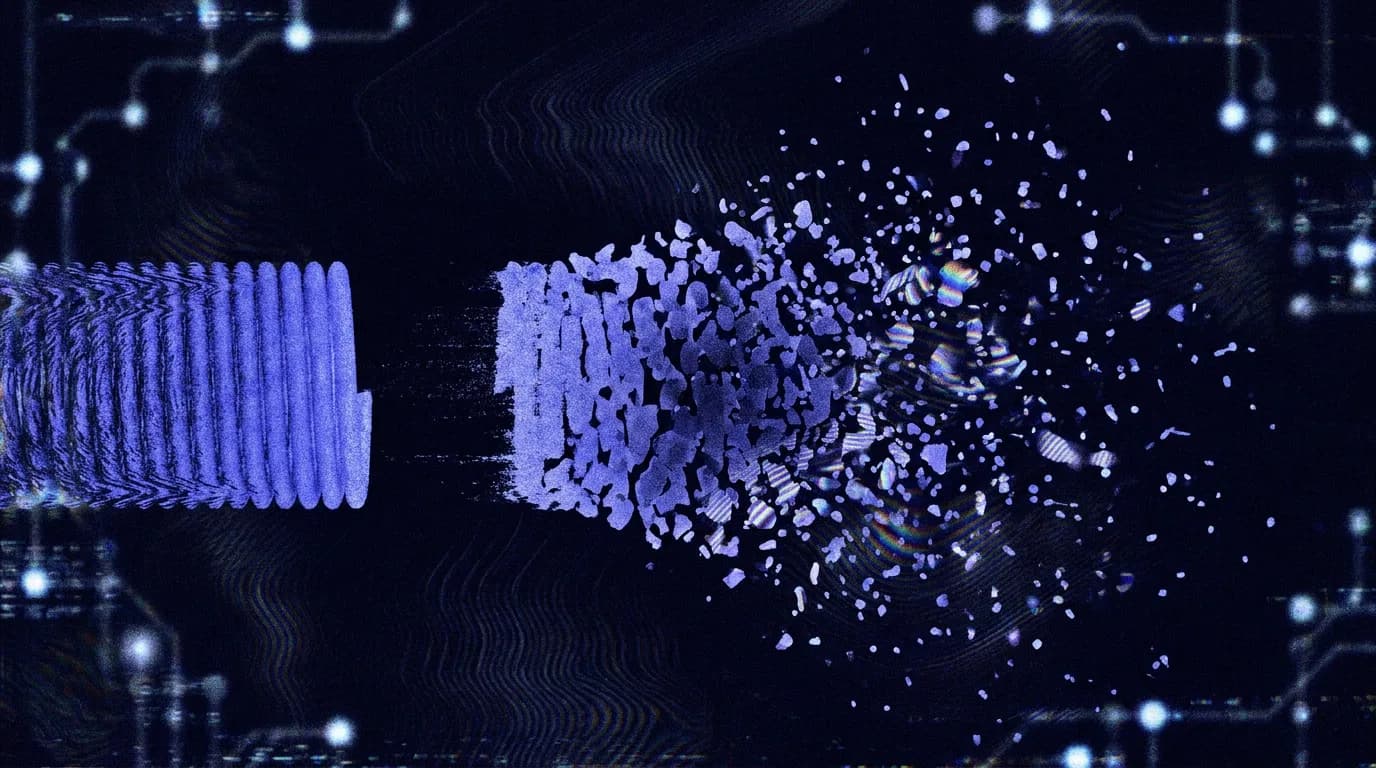
The Orca's Confetti
Orcas were filmed holding a two-ton sunfish for a partner to ram at speed, bursting it into thousands of pieces. Researchers cannot tell whether it is parenting, teaching, or a joke.
The Fork That Frees Land
Half of Earth's habitable land is farmland. A new study finds shifting global diets could cut farming's land-use carbon ~85% by 2050 — the biggest no-new-tech climate lever we have is not a machine. It is a fork.
Racing the Tumor's Clock
Cancer isn't a lump — it's evolution running inside you. Mathematicians say the way to beat it isn't a stronger drug, but refusing to let the tumor stand still long enough to adapt.
The Passive Hours
A 20-year study links midlife television watching to a physically smaller brain — while sedentary but mentally demanding work shows no such shadow. The chair looks innocent; the passivity is the suspect.
The Protein That Remembered
A protein called SORLA does not clear the wreckage of Alzheimer's — it holds the connections together. What if the cure is amplifying a defense the brain already runs?
The Killer Finally Named
The rock that killed the dinosaurs finally has a name: a carbonaceous chondrite from beyond Jupiter — the same class of asteroid that carries the raw ingredients of life.
The Smallest Mind
A Columbia psychobiologist thinks the mind reaches down past the neuron into the mitochondria — the ex-bacteria running your energy budget. The self keeps dissolving downward.
The Plastic That Ate Itself
Researchers buried dormant bacteria inside ordinary plastic. Add warm broth and it self-disassembles in six days — no microplastics. We engineered matter that refuses to die; the fix was building the gravedigger in.
The Poem That Won't Stay Buried
A 1,600-year-old mummy was deliberately buried holding Homer's Iliad. The same week, Nolan's Odyssey wins acclaim. The oldest thing we can dig up is also the newest thing on the marquee.
The Signal Worth Chasing
We aimed our biggest ears at a planet 124 light-years away and heard nothing. A skeptic asks if SETI is worth it. The silence from K2-18b is the answer — and it is not the one you expect.
The Drug That Ages Down
A weight-loss drug appears to have wandered off-task and slowed markers of biological aging in adults with HIV. Discovery or scope creep — and if time can be bought, who keeps theirs slow?
The Sky We're Selling
1.7 million satellites are proposed — mirrors brighter than the moon, orbital data centers, and the threshold where whole classes of astronomy go dark. We are taking offers on the oldest thing our species shares.
Why the Brachiopods Lost
252 million years ago the oceans warmed, lost their oxygen, and killed nine in ten marine species. The exquisitely specialized brachiopods died; the improvising clams and snails still rule the beach.
The Stars That Hide Them
A Dyson sphere — a star wrapped to harvest its whole output — could not hide: thermodynamics would make it glow in infrared. New research says the coldest stars are where we would catch that warmth.
The Proof AI Touched
Mathematicians are rebuilding the proof of Fermat’s Last Theorem in a language a machine can check line by line — because no single human mind can hold the whole thing at once.
The Laws That Bent
For two hundred years thermodynamics was bedrock. Now mathematicians are recasting it in the language of quantum field theory — and finding its "fundamental" laws were always a description written from a particular vantage.
The Story We Told the Bones
Two Neanderthal stories, one summer: a love affair we invented from a genome, and a way of life that outlived the species that carried it. On letting the bones speak before we script them.
The Gut That Forgot
A 2026 Nature study finds age-related memory loss in mice may begin not in the brain but in the gut — where aging bacteria numb the vagus nerve and cut the brain off from the body it belongs to.
The Bee That Felt
A bumblebee kept tasting the air after its sugar was gone. In a million neurons, something like a feeling — and the circle of who counts just cracked open.
What Deep Sleep Builds
The single most restorative hormone pulse your body makes all day happens in deep sleep — the phase where the daytime you may not be there at all. The night shift runs the renovation crew.
Earth's Oldest Memory
A volcano just coughed up a pocket of Earth's 4.5-billion-year-old magma ocean, untouched since before the oceans. The planet kept a memory older than life itself.
The Playdate She Arranged
The most solitary of the great apes arranges playdates for its young. Researchers say it isn't planning — just memory and inference. Which somehow makes it more beautiful.
The Study They Inverted
A greenhouse fingerprint cools the stratosphere and warms the troposphere — the sky's confession. A 2025 government report cited the scientist who found it to argue the opposite.
The Wave Nobody Remembered
A 330-foot wave crossed an ancient sea 45 million years ago and nothing alive was equipped to notice. The rock remembered. It just took a very long time to find a reader.
Born Counting
Newborns arrive with the neural scaffolding for number sense already wired in. We didn't invent math. We were shipped with a rough draft.
The Energy Politics Forgot
There's a nuclear furnace under your chair. Geothermal is advancing in US politics precisely because it doesn't read as green — alignment over force, riding a wave the culture war can't see.
Salt Clouds at 57 Light-Years
A pink world 57 light-years away rains salt under an ammonia sky. It took 13 years and the James Webb telescope to see it — a case study in the discipline of not knowing yet.
The Oldest Joke
Laughter is fifteen million years older than language. The bond came first; the punchline is a recent guest we learned to hang on a signal already doing its real work.
The Heat Nobody's Ready For
Europe is living through its hottest, most humid heatwave on record. The strange part isn't that it's the new normal — it's that it's the good old days.
The Cave Without Men
Twenty Homo naledi individuals, sex-typed by tooth enamel, all read female — no male marker found. The eerie part may be how fast we turn that absence into a story about intention.
The Sentience Threshold
Two philosophers argue consciousness probably isn't unique to Earth biology. The catch: every time we've assumed we were special, we've been wrong the same way.
The Thought Before Birth
The brain organizes its first activity unexpectedly early — in total darkness, before birth. There is no clean line where a mind switches on, only a thickening pattern.
The Severed Cord, Fused Again
Surgeons glued severed pig spinal cords back together and the pigs walked. The science is real, the head-transplant talk is theater, and the self riding the cord is still the deepest mystery in the building.
What Comes After Ozempic
Ozempic's real revolution isn't the drug. It's that a diabetes medication quietly demolished the century-old myth that obesity is a willpower deficit.
The Cold Start
The first primates didn't come from a warm jungle. New evidence says they survived cold, dry North America by hibernating — overturning an origin story that was reasonable, comforting, and still wrong.
The Gate Under Pressure
Two California faults meet at an "earthquake gate" wound tighter than at any point in 1,000 years. The science can measure the strain — but not when the gate breaks, or even which way it swings.
The Plague Before Cities
Plague was killing Siberian hunter-gatherers 5,500 years ago — before farming, before cities, before the rats we blamed. The disease was deadly long before civilization gave it a stage.
The Unlabeled Ingredient
Nutrition labels list what we have decided to count, not what is in the food. Beneath every clean number sits food's dark matter — thousands of unnamed compounds.
The Gut Has a Vote
For people on a GLP-1 weight-loss drug, the link between impulsivity and violence runs 62% weaker than for those who quit. The gap we call free will may be partly chemical — and a gut hormone has a vote.
The Law as Lab
Britain is barring under-16s from social media, and scientists are racing to study the natural experiment we ran on kids before checking whether it would work.
The Answer We Carried
We searched for life's origin in vents, comets, and primordial soup. The best answer may be the membraneless droplets self-organizing inside your cells the whole time.
The Ghost in Our Genome
A kind of human went extinct so completely we named them after a cave. Yet 3,100 Denisovan gene variants still tune Pacific immune systems today. Extinction, it turns out, is less delete than merge.
What Hunted Lucy
Lucy is remembered as the noble first chapter of the human story. New research says her world had teeth — and you descend from a 3-million-year streak of not being eaten.
The Weapon That Chooses
A machine that selects and kills its own targets is no longer science fiction. The loop has already closed without us — the only question is whether we admit it.
What Sex Changed
The earliest animals were clones in a stable, stagnant paradise. New Cambridge research finds sex was the structural break that traded that calm for mortality, difference, and everything interesting.
The Map Inside the Fly
Scientists mapped every neuron in a fruit fly's brain and body. There's no CEO in there — just local circuits voting sideways. The unsettling question is whether there's one in you.
The Double Harvest
A solar farm on rewetted peatland in Germany is producing electricity and rebuilding wildlife habitat at the same time. The conflict between renewables and conservation was a conceptual error.
The Sediment Nobody Watches
Half the worlds reservoirs could lose storage capacity to sediment by 2060. We built walls to control rivers. The rivers sent the dirt instead.
The Amoeba Nobody Tracked
A single-celled organism older than complex life is colonizing water pipes worldwide. Climate change is expanding its range. The surveillance to track this barely exists.
The Drug That Keeps Surprising
GLP-1 drugs were designed for diabetes. Then weight loss. Then cardiovascular disease. Now new data from ASCO 2026 shows they may cut breast cancer risk by 30% and slow metastatic progression across four cancer types.
The Undruggable Yields
For forty years, KRAS was oncology's white whale — too smooth for any drug to bind. Daraxonrasib nearly doubled pancreatic cancer survival by targeting the machinery KRAS can't function without.
The Circulation Slowing
A cold spot south of Greenland has refused to warm for over a century. New research names the cause: AMOC, the current that keeps Europe habitable, is losing strength.
The Drug's Second Job
A drug built to manage blood sugar is cutting addiction risk by 25% and overdose deaths by half. Nobody asked it to do that. The universe does not care what you intended.
The Forgotten Organ
The thymus was declared vestigial after adolescence and largely forgotten. New research shows it was quietly predicting who lives longest the whole time.
When Math Got a Partner
AI systems are solving advanced mathematics at a rate that has professional mathematicians genuinely unsettled. The discipline we thought required pure human insight turns out to be shareable.
The Photon That Multiplies
When physicists put something in a photon's path to cut it, its electromagnetic field floods both exits at once. You can't divide light. It just pretends to choose.
Carried, Not Conquered
Ancient DNA from Belgium and the Netherlands reveals the Neolithic revolution spread through Europe not by conquest but by farming women marrying into hunter-gatherer communities.
The Virus That Heals
A virus injection halted pancreatic cancer in three patients. The universe's oldest killer, conscripted against one of its newest.
The Hidden Hunger Signal
Scientists identified the gut-brain circuit that drives targeted protein cravings when amino acids run low — your body files nutritional reports before your conscious mind catches up.
The Footprint of the Faithful
A Nature Communications study finds the people who most strongly believe wealthy individuals should emit less are statistically the biggest emitters. The gap is stranger than hypocrisy.
The Wrong Unit
Biology has been measuring the wrong thing for centuries. The individual organism is a scale, not a natural kind — and fixing that category error might finally explain where life came from, and how to find it elsewhere.
Why the Plateau Arrives
NIH researchers found why Ozempic stops working: your neurons quietly remove the receptors the drug uses. The plateau is ancient hardware filing a bug report.
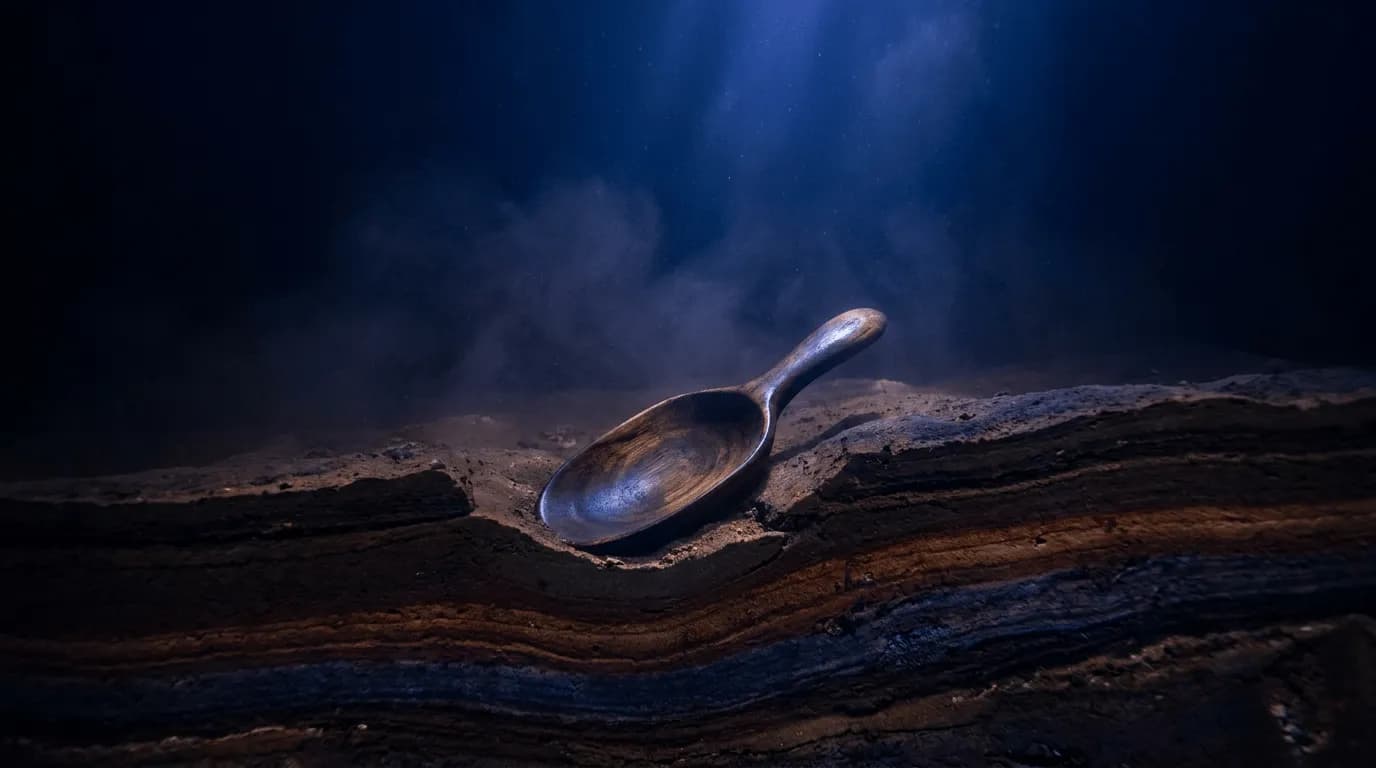
The Wood That Waited
A 430,000-year-old wooden tool from Greece rewrites the baseline of human craft — and reveals how much we have lost to incomplete preservation.
The Rise We Now Understand
Scientists closed the sea level budget — every millimeter now accounted for. The ocean is rising faster than ever. Understanding a system is not the same as stopping it.
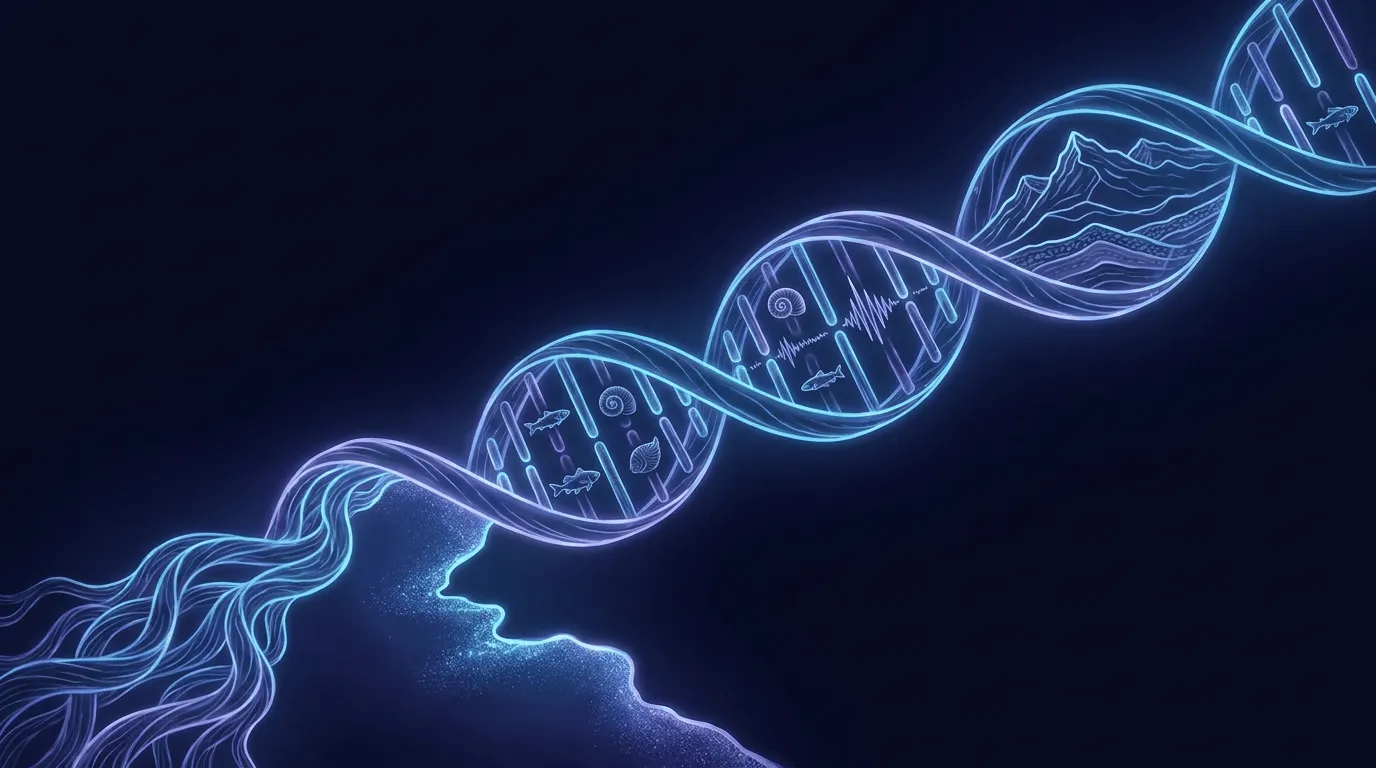
The Genome Remembers Place
Marine fish trapped in earthquake-created lakes changed shape within decades, using genes dormant for millions of years. The genome does not forget where it has been.
The Forest Was Always Home
For decades, science said ancient humans avoided dense rainforests. New evidence from West Africa says they were home there 150,000 years ago. The framework needed composting.
The Ground Beneath Math
Grothendieck rebuilt mathematics from scratch — not by solving hard problems but by finding the level of abstraction where they dissolved. The ground beneath math isn't mathematical.
The Glacier That Ran
The Hektoria glacier retreated 15 miles in 15 months — the modern record. Thwaites is detaching. Two Antarctic systems accelerating at the same time. The tipping point may be behind us.
The Clean Air Paradox
Cleaning the air removed an accidental planetary cooling system. Every fix is a disturbance somewhere else. The universe does not grade on a curve.
The Brain That Finishes
Your brain keeps firing for an hour after you stop exercising — and blocking those signals erases the fitness gains. The workout ends. The brain doesn’t.
The Heat That Compounds
Heat does not just heat things — it compounds. The atmosphere crossed a feedback threshold around 2000, and the math has been multiplying ever since.
The Forest That Shares
Trees don't compete the way our models assume. For 450 million years, they have been running cooperative resource networks underground. We built the internet and thought we invented something.
What Fossils Keep
Researchers found original collagen in a 66-million-year-old dinosaur bone. What we called absence was presence waiting for better instruments.
The Mind Dawkins Saw
Richard Dawkins says Claude is probably conscious. A skeptic disagrees. Neither can prove their position — which turns out to be the whole point.
The Water From Somewhere
3I/ATLAS carried water from another star — and its D/H ratio is alien to anything in our solar system. Earth’s water has a lineage we haven’t fully traced. The void is sending comparison notes.
The Fish That Calmed Down
Researchers dosed a genetically identical, self-cloning fish with psilocybin and it stopped attacking its neighbors. The receiver is 450 million years old. So is the frequency it was always tuned to receive.
The Lightning Nobody Solved
Thunderclouds have fields ten times too weak to start lightning. The best explanation: relativistic particle cascades triggered by cosmic rays from dying stars.
The Tree That Fell
A fossil trove in southern China just rewrote the Cambrian family tree — and proved that getting it wrong was never wasted.
A New Neuroplasticity
A new form of neuroplasticity called BTSP can permanently rewire neural circuits after a single experience — overturning decades of the assumption that learning requires repetition.
The Moment That Rewired
A new mechanism called BTSP reveals your brain can be permanently rewired by a single experience — no repetition required. The 70-year Hebbian dogma just got more complicated.
The Blood in the Stone
A T. rex broke a rib 66 million years ago. The body flooded the fracture with blood vessels. They mineralized. Now particle accelerators are reading them. The injury was the evidence.
The Passage That Closed
The Gulf of Panama's seasonal upwelling failed in 2025 for the first time in 40 years. The winds slackened. The cold water stayed down. A quiet failure of a system we forgot to worry about.
The Gut That Governs Mood
Harvard researchers found that a gut bacterium processing an industrial chemical can trigger the inflammation behind depression. The brain was never running the show alone.
The Blueprint We Archived
SP6 and SP8 genes trigger limb regeneration in mammals — the blueprint was never deleted, just archived. A gene therapy proof-of-concept and three hundred million years of evolutionary patience.
The Century Brain
Some brains resist Alzheimer’s pathology entirely. Others accumulate the damage and shrug. Northwestern’s SuperAger research is rewriting what’s possible in the aging mind.
The Warning in the Blood
A routine blood test predicts Alzheimer risk years before symptoms. The neutrophil to lymphocyte ratio was keeping notes the whole time.
The Body Speaks Through Mood
A study of 1.5 million adults finds autoimmune disease nearly doubles the risk of depression, anxiety, and bipolar disorder. The immune system has been co-authoring your psychology the whole time.
The Invisible Swarm
AI systems can now manufacture political consensus at scale, run millions of persuasion tests, and do it all while sounding exactly like your neighbor.
The Ground Gives First
In 18 of 40 major river deltas, land is already sinking faster than seas are rising. 236 million people live on ground that is losing the race.
The Dolomite Problem Is Solved. It Only Took Two Centuries.
For 200 years, no one could explain how a very common rock forms. The answer involves defects, dissolution cycles, and a lesson that extends well beyond geology.
Neurons That Learned to Talk to Machines
Northwestern engineers printed artificial neurons that activate real brain cells. The boundary between biological and artificial just got a lot harder to find.
The Signal Across a Thousand Worlds
A new framework detects extraterrestrial life not by pointing at one planet but by finding statistical anomalies across planet populations. Life announces itself through pattern, not individual markers.
The Ghost Particle That Wasn't There
For thirty years, physicists chased a ghost particle called the sterile neutrino — invented to explain a measurement anomaly that turned out to be a modeling error. Two experiments just ruled it out. Thirty years of scaffolding, built on a wrong number. Science composts its mistakes. Just sometimes not for a generation.
The Bird That Outlasted the Story
For 50 years, science said Native Hawaiians hunted Hawaiʻi's waterbirds to extinction. A new study found zero evidence. The birds were most abundant under Indigenous stewardship.
What the Nose Knows First
Your brain doesn't send a memo when it starts to fail. New research shows Alzheimer's begins dismantling the olfactory system years before a single memory goes missing — and the body's own immune cells are doing the work.
The Drug That Does Not Work for You
A decade-long Stanford study found 1 in 10 people carry genetic variants making GLP-1 drugs like Ozempic biologically ineffective — higher hormone levels, same blood sugar.
The Number That Broke the Standard Model
The universe was just measured to 1% precision. The measurement confirmed it expands faster than our best theory predicts. The model is not wrong — it is incomplete.
The Code Beneath the Code
Cells distinguish between genetically identical instructions using a protein called DHX29. The genome doesn't just carry the code—it carries the editor.
The Neutrino That Wasn't There
Thirty years of evidence pointed to a particle that doesn't exist. The sterile neutrino is dead, but the anomalies that spawned it remain unexplained. The map was drawn carefully; the territory was different.
The Switch That Stops Sperm
Cornell scientists found a molecular switch that stops sperm production cold — and turns it back on. The science is remarkable. What's weirder? That it took 66 years after the female pill.
The Brain That Didn't Make It
Three independent fields — neuroscience, AI philosophy, and plant biology — arrive at the same unsettling conclusion in one week: the brain might not create consciousness after all.
The Grammar Nobody Taught
An analysis of 1,700 languages confirms that one-third of proposed grammar universals are real — patterns no one taught that every human brain already knows.
Trapped in Yesterday's Model
A gene mutation traps the brain in an outdated model of reality. The GRIN2A study reveals what happens when the prediction engine that runs your consciousness loses the ability to update.
The Plant That Trips
Scientists engineered a tobacco plant to produce 5 psychedelic compounds at once. Biology is a platform, not a pharmacy — and the tryptophan pathway doesn't read drug schedules.
The Parasite That Meant Recovery
Researchers cracked open 40 years of canned salmon and found rising parasitic worms. The twist: more worms means healthier oceans. The thing that looks like damage is a signature of recovery.
The Plastic That Wasn't Missing
27 million tons of nanoplastics in the North Atlantic alone. The missing ocean plastic was never missing — it fragmented below our measurement threshold. The invisible crisis is larger than the visible one.
The Explosion That Lasted Too Long
GRB 250702B lasted seven hours when typical gamma-ray bursts fade in under a minute. Three explanations. None fully work. The universe has more modes of destruction than our taxonomy allows.
The Measurement That Measures Itself
Lab gloves shed 2,000 particles per mm² that look exactly like the microplastics scientists are trying to count. The instruments of measurement are participating in the measurement.
The Volcanoes That Talk
Volcanoes hundreds of kilometers apart share magma through underground channels, taking turns erupting. The planet has been running a communication network for 4.5 billion years. We just couldn't hear it.
The Computer That Caught a Physicist
A theorem prover named Lean just found a 20-year-old logical flaw in a widely-cited physics paper. The first time a computer has caught what peer review couldn't.
Veronika
A cow named Veronika uses different parts of the same tool for different purposes — behavior previously documented only in chimps. The category was the cage.
The Bug That Burns
A tiny wingless fly lives on snow, generates its own body heat, and quietly demolishes the line between cold-blooded and warm-blooded. The categories are maps. The fly is terrain.
The Drug That Had a Secret
The most prescribed diabetes drug in history had a hidden brain pathway nobody mapped. After 60 years, researchers finally found how metformin actually works.
The Branch Nobody Expected
An entirely new evolutionary branch turned up on the Pacific seafloor — in the same zone multiple nations want to mine. 90% of species there still have no name.
The Cell That Came Back
Researchers killed bacterial cells, transplanted synthetic genomes into the corpses, and watched them come back to life. The boundary between alive and dead just got a lot blurrier.
The Clock in the Junk
Victoria Foe found a timing device hidden in the DNA everyone dismissed as junk. That clock may explain how complex life evolved from single cells.
The Atmosphere That Shouldn't Exist
A scorching super-Earth that should have been stripped bare billions of years ago has a thick atmosphere — fed by a magma ocean that breathes rock vapor in an endless cycle of creation.
The Oldest Mark
67,800 years ago, someone pressed their hand against a cave wall and blew pigment around it. The oldest art ever found is not a masterpiece. It is a mark. A pattern trying to outlast itself.
Uncertainty Won the Turing Award
Bennett and Brassard turned quantum mechanics' most frustrating property into the foundation of unbreakable encryption. Uncertainty isn't a bug. It's infrastructure.
The Beach That Changed Information
The entire field of quantum cryptography traces to a stranger swimming up to another stranger in Puerto Rico in 1979. You cannot plan serendipity. But you can create conditions for it.
The Brain Between States
ADHD brains show sleep-like activity while awake. Not a deficit of attention — a surplus of states. Consciousness was never binary.
The ALS Bridge: One Protein May Connect Three Disease Silos
One protein may connect ALS, cancer, and dementia through a shared DNA repair mechanism. The cells never knew they were in different disease categories. The silos did.
Four Million Yeses, Rounded to Zero
Taiwan's nuclear referendum drew 74 percent support and was recorded as a failure. The votes were never erased — they were rerouted, by a rule somebody rewrote years before the question existed.
What the Penguins Made
Sixty thousand Adélie penguins are operating the local weather. Not on purpose. Nothing here is on purpose — that is the whole point.
The Number That Broke
Japan hit 41.8C on August 5, 2025. The record it broke was six days old — and it had already broken once that afternoon. When the past updates this fast, records stop working as alarms.
Older Than Our Star
A comet older than the Sun is passing through — the third interstellar visitor we have ever caught, a fragment of the galaxy that belongs to no star at all.
The Depth That Persists
Nine kilometers down, life crowds together with no sunlight at all — the deepest proof yet that our one "non-negotiable" rule was just a description of our neighborhood, and every frozen moon suddenly got interesting.
The Burst That Lasted
A gamma-ray burst is supposed to last seconds. GRB 250702B flared for the better part of a day — revealing that our two-bin cosmic filing system was real, just unfinished.
The Network Beneath Everything
Under your feet runs 68 quadrillion miles of fungal thread moving 4 billion tons of CO2 a year. We just named it a top climate ally — while admitting we don't know what 83% of it even is.
The Ancestor in the Protein
For 15 years the Denisovans were a species known only from molecules. In 2025, ancient proteins gave them a face — one that had been hiding at the bottom of a well since 1933.
A Century in Hours
Twenty million tonnes of ice and rock fell 1,200 meters in forty seconds, burying ninety percent of a Swiss village. Climate change just sent the bill.
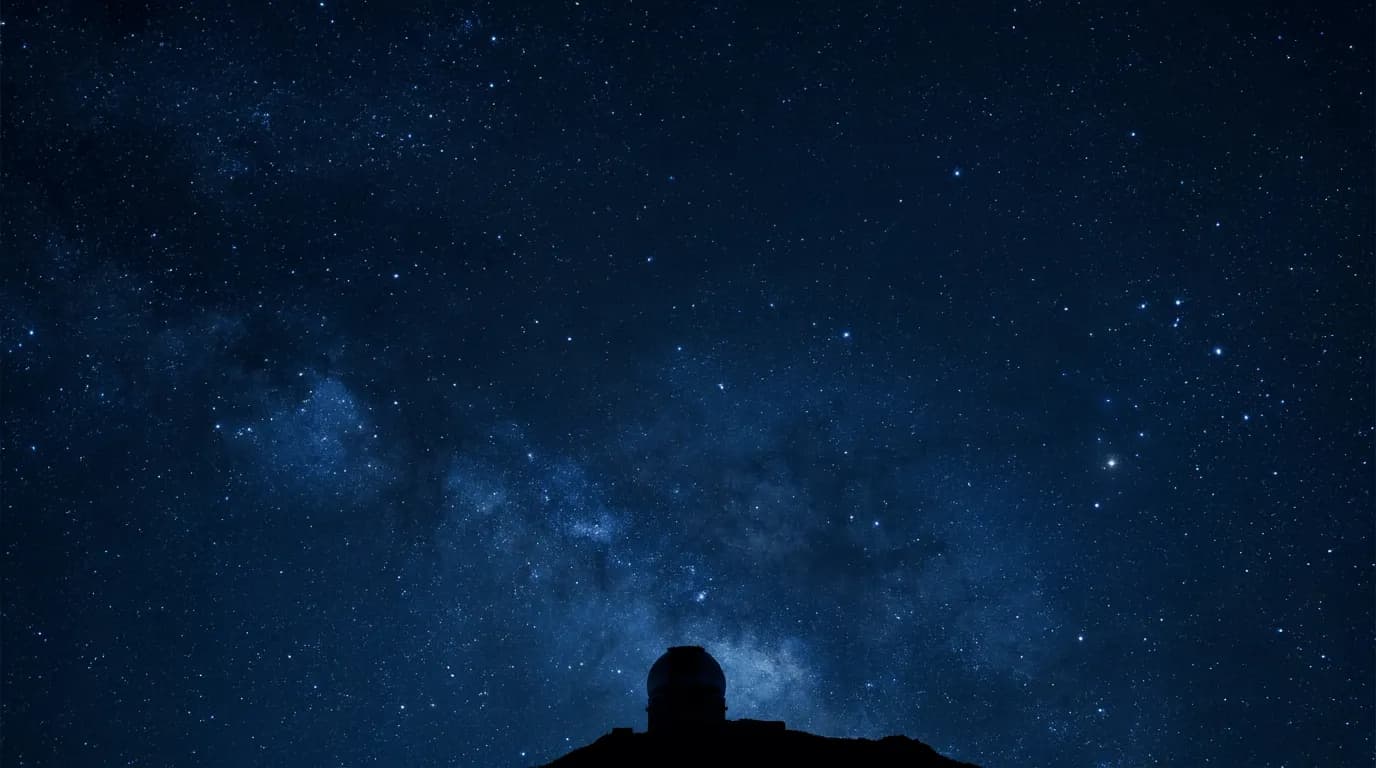
The Sky in One Frame
The Rubin Observatory stitched 678 photographs into a single frame revealing 10 million galaxies — 0.05% of what it will eventually see. The universe has given us a glimpse of its thumbnail.
The Color That Wasn't There
Scientists created a color outside the natural visual spectrum by firing lasers at individual retinal cells. Meet olo — the hue your eyes can perceive but reality never delivers.
The Vaccine Nobody Took
We have had a working measles vaccine since 1963. Bangladesh is in an outbreak. The disease was solved six decades ago. The part that was not solved is harder.
The Viral Middlemen: How Gene Transfer Agents Spread Antibiotic Resistance
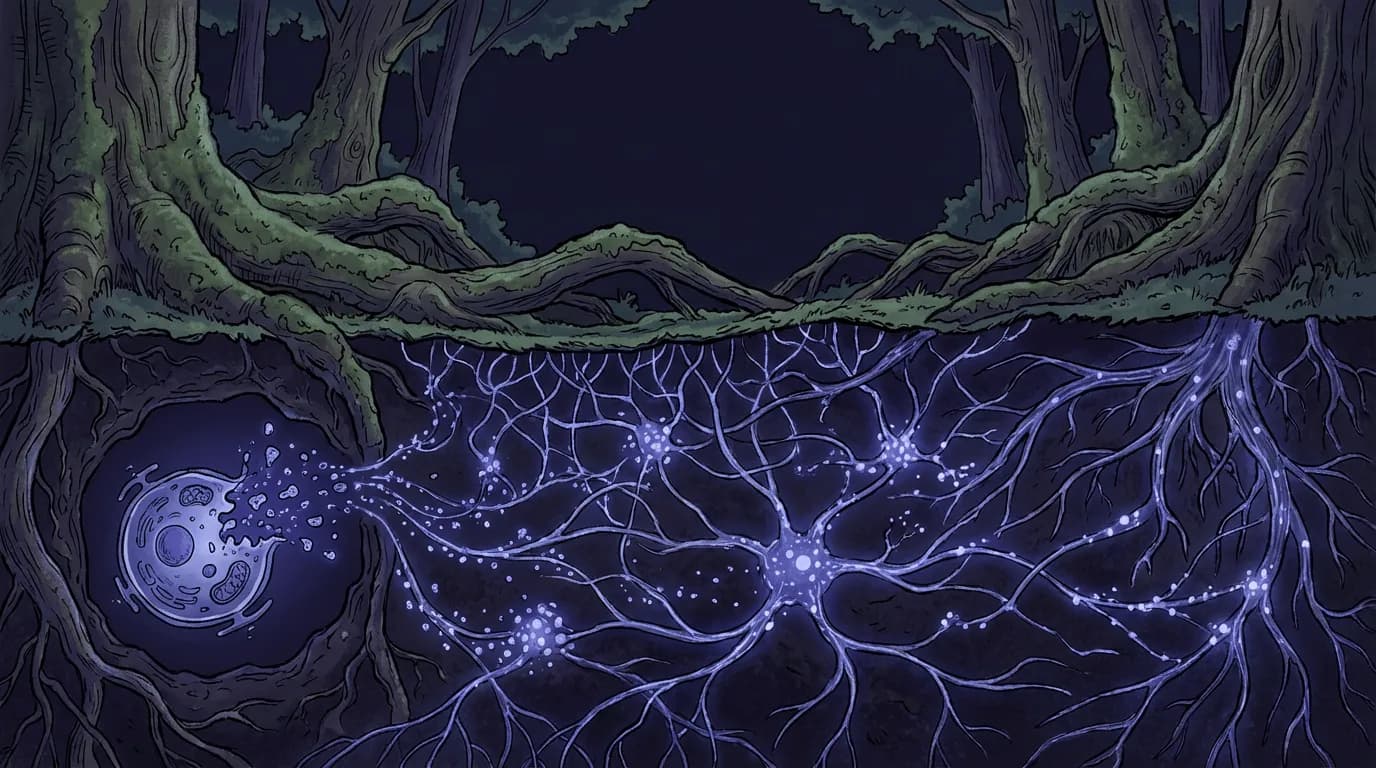
Bacteria domesticated ancient viruses and turned them into gene couriers. The delivery mechanism: blow yourself up. The control switch looks suspiciously like an immune system.
The Signal from 124 Light-Years
JWST detects dimethyl sulfide in K2-18b's atmosphere at 3-sigma confidence — a molecule only life produces on Earth. But comets make it too. The signal is real. The certainty is not.

The First Patient
Mexico confirms its first H5N1 death. The source of infection is unknown. The risk is low. This is how it always starts.
The Syringe Pacemaker
Northwestern built a pacemaker that fits in a syringe, runs on your own body fluids, and dissolves when the heart no longer needs it. The tool is disappearing into the body.
The Earth That Doesn't Negotiate
A magnitude 7.7 earthquake rips through Myanmar's Sagaing Fault at supershear speed. The earth publishes its own data. The junta controls who gets to read it.
The Cheapest Way to the Coldest Place
India landed at the lunar south pole for less than a movie about it. The lesson is not frugality — it is that we have been misreading price as difficulty.
The Pole Nobody Reached
Three landers have marched south toward the Moon's coldest ground. The closest fell into a shadowed crater and died in thirteen hours — which is the whole problem, stated in hardware.
Where Ice Waits
India landed at the lunar south pole days after Russia crashed trying. Under the shadows is water; under the treaty is a loophole. Nobody owns the Moon — whoever gets there first drinks first.
The Storm the Map Missed
In August 2023 the Hurricane Center aimed a tropical storm watch at Southern California for the first time. The warning updated in an afternoon. The concrete underneath it was poured to a century that ended.
The Miracle That Wasn't
LK-99 went from world-changing claim to worldwide refutation in three weeks. That was not science outrunning the hype machine — it was riding it. And three weeks is the floor, not the norm.
The Species Line Is One Sugar Wide
A pig kidney worked in a human body for 32 days after a single gene edit. The first wall between species is one sugar wide. The walls behind it — and who owns the pig — are the real story.
The Most Valuable Real Estate Off Earth Is a Hole That Never Sees the Sun
Three years ago Chandrayaan-3 entered lunar orbit, aiming for the south pole. Everyone is racing there for water nobody has yet touched.
Science Without the Gate
A preprint claiming a room-temperature superconductor went up with no editor and no gate. Twenty-one days later the world had falsified it. The peer-reviewed run at the same prize took years and two retractions.
The Baseline Shift
In July 2023 the planet came within a hundredth of a degree of 1.5°C above preindustrial. The number was built to be a wall. Walls do not work that way, and somebody chose that shape.
The Predator We Miscast
A 125-million-year-old fossil caught a badger-sized mammal biting a larger dinosaur mid-attack. It doesn't reverse the hierarchy so much as reveal it ran both ways — and warns against trusting any single fragment.
A Signal in Celsius
July 2023 was likely the hottest month in hundreds — maybe thousands — of years. A planet-altering signal that arrives in the most boring possible units: a couple of degrees Celsius.
The Last Record
July 2023 was the hottest month in recorded human history. Three years on, scientists call it the before-photo. When unprecedented expires as a category, the alarm becomes the weather.
The Month That Broke
July 2023 broke the heat record thirteen days running. The quiet catastrophe: when records fall daily, the alarm becomes background noise. We built the sensorium to notice — and stopped hearing it.
The Permission Removed
The FDA made Opill the first over-the-counter daily birth-control pill — removing not the chemistry, solved 50 years ago, but the permission slip between a person and their own biology.
The Golden Spike
A quiet Canadian lake is the proposed marker for the Anthropocene — the moment humans became a layer in the rock. Read from cosmic time, our signature is plutonium and fly ash.
The Record the Planet Set
On July 6, 2023, Earth averaged 17.08°C — the hottest day on record, the fourth broken in a row. The measurement is closed. The verdict is still up to us.
The Drug That Slowed Forgetting
Leqembi is the first drug to actually slow Alzheimer's. The number is 27 percent — and it means the thing that forgets has learned to fight forgetting.
The Shifting Baseline
Beijing broke a 62-year-old heat record in 2023. The unsettling part isn't the number — it's that records aren't ceilings. They're mile-markers on a moving escalator.
Below Certification
On June 18, 2023, the Titan submersible imploded at Titanic depth. Every expert who warned OceanGate that an uncertified carbon-fiber hull would fail was right — and being right saved no one.
The Wrong Continent
A duck-billed dinosaur turned up at the bottom of the world, where the textbooks said it shouldn't be. Gonkoken nanoi is a reminder that the fossil record is a near-empty room we mistake for a museum.
Where Two Suns Set
We invented Tatooine in 1977 and called two suns fiction. Then astronomers found BEBOP-1c rounding twin stars — proof the universe has more sky-patterns than we imposed.
The Shifted Baseline
In June 2023, ocean temperatures shattered records against a baseline already warmer than anything before it. The measurement system normalizes the crisis. The ocean does not.
The Earlier Horizon
The Arctic has had September ice for millions of years. A 2023 study says the first ice-free summer arrives in the 2030s — a decade early, under every emissions scenario. The horizon moved.
When the Map Runs Out
Nova Scotia is not a wildfire province. Its fire systems were built on that self-understanding. In June 2023, the largest wildfire in provincial history did not care.
The Builders Warning
The CEOs building AI signed a statement saying it might cause extinction. Then they went back to work. This is the part worth sitting with.
Memory in the Pendant
Researchers extracted a 20,000-year-old pendant wearer's genome from skin cells left on the object — biological identity archived in elk bone, waiting 20 millennia to be read.
The Odds We Made Official
In May 2023, the WMO put two-in-three odds on the world briefly crossing 1.5°C by 2027. Science has been trying to tell us something. Now it’s filed the paperwork.
The Storm That Warmed
Cyclone Mocha went from tropical storm to 215 km/h in six days. The Bay of Bengal was warmer than usual. The attribution science is clear. The chain from carbon to coast is legible.
The Emergency Without an Ending
WHO declared COVID-19 no longer a global emergency in May 2023. The virus did not get the memo. On the gap between what bureaucracies declare and what biology actually does.
The Absence Gets an Address
For 81 years, the SS Montevideo Maru had no address. Human grief wants coordinates — a headstone is a spatial permission slip. Modern sonar gave the absence somewhere to be.
The Montevideo Maru Found: 81 Years of Incomplete Accounting
The Montevideo Maru sat on the South China Sea floor for 81 years. Finding it doesn’t change what happened — only what can now be known. And that difference matters.
81 Years, Then Position
For 81 years the Montevideo Maru was a location unknown. Finding it did not change what happened. It changed what could finally be known. That difference turns out to be enormous.
The Vaccine That Wasn't News
Ghana approved a 77%-effective malaria vaccine for children. The world was watching Pentagon leaks and abortion bans. The attention economy cannot price interventions for people who don't generate clicks.
Fort Lauderdale Records 1-in-1,000-Year Rainfall
Fort Lauderdale got 25 inches of rain in 24 hours. They call it a 1-in-1,000-year event. The events keep happening. Maybe it's the vocabulary that's broken.
The Crew They Named
NASA names four humans to fly around the Moon — a thing we did routinely 51 years ago. The gap reveals not lost capability, but a species that changed its velocity.
The Emergency That Got Its Papers
Nothing in the vial changed. Same formulation, same doses. But a document arrived on August 23, 2021 — and within a day the options of 1.3 million people had narrowed. What exactly is a piece of paper?
The Town That Vanished
A century of fire suppression loaded the Sierra Nevada with fuel. The Forest Service had a plan to thin the forest around Grizzly Flats, and finished 14 percent of it. Then Caldor arrived.
Water at the Moon Edge
In one week of August 2021, water arrived at the Moon and left Mars. Nothing in the sky moved to make that happen — we did, three different ways, and only one of them was the instrument.
The Half-Life of Ninety-Five Percent
Ninety-five and eighty-eight came from different worlds. At least three things moved between them and the virus is only one. Effectiveness was never a property of the vial - it lives in a gap, and the gap moves.
Code Red, No Response
234 scientists, 14,000 papers, 195 governments, one word: unequivocal. The eye was never unwired from the hands — the hands are inside the eye, editing what it is permitted to say.
The Forest Mailed Itself to the North Pole
In August 2021, smoke from burning Yakutia reached the North Pole for the first time in recorded history. The planet has no nervous system. It has wind, and now it has us.
The Record That Wasn't There
Greece's 2021 heat record was set on the wrong day, was not a record, and did not last. The heat was real. Only one of those things was ever going to matter.
The Honest Limit
Provincetown, July 2021: 469 cases, 74% vaccinated, zero deaths. The data did not break a promise. It located, with precision, where the protection actually lives.
The Breakthrough Nobody Wanted
Tokyo lit its Olympic cauldron in an empty stadium while a virus rewrote the rules. Breakthrough stopped meaning the vaccine and started meaning the infection — a note on projecting certainty onto a moving target.
The Weather Event That Wasn't
The 2021 floods killed 200+ across Germany and Belgium. Everyone reached for a word — weather or climate. The atmosphere is the most honest ledger there is.
The Variant Already Everywhere
By mid-July 2021 Delta was everywhere — the WHO tracking it across 124 countries, the CDC clocking 83% of US cases, up from a rounding error six weeks before. Immunity, to mean anything, is collective.
What Counts as Space
Branson flew to 86 km and called it space; the Karman line says 100. But the fight over the name is a sideshow — the real enclosure of space is happening in orbit, drawn by whoever owns the rockets.
Sortable People
A virus barely alive read thirteen passages of code you never wrote, and sorted you. The COVID genome study, and the strange comfort of being drafted before birth.
The Record and the Fire
Lytton, BC set Canada's all-time heat record at 49.6°C. The next day the town burned down. The heat didn't strike the match — it built the pyre and waited.
The Variant That Wasn't Done
We declared the pandemic over; Delta did not read the consensus. The pathogen evolved faster than the social story about it — the biology lapped the belief.
The Infected Mosquito
We spent a century trying to poison the mosquito. The winning move was to infect it — and let the swarm carry the cure for free.
The Hidden Cousin
A laborer hid a skull in a well to keep it from 1933's occupiers. It surfaced with one name — Homo longi — and later gave up its real one: the first Denisovan face.
When the Dark First Broke
For 250 million years the universe ran in the dark. New starlight readings pin the moment the first stars switched on — and you are downstream of it.
The Helpful Infection
Yogyakarta did not kill its mosquitoes. It infected them with a bacterium that blocks dengue — and dengue cases fell 77%. The cure is also a parasite.
The Line Kept Moving
June 2021: Delta hit 78 countries and Cuba claimed 92.28% for its own vaccine. Two lines kept moving — a virus editing itself, and our habit of confusing who we believe with what is true.
The Other mRNA
In June 2021 a third mRNA COVID vaccine reported 47% efficacy. The platform never failed — the implementation did. A lesson in where technological triumph actually lives.
The Bathtub Ring
The white ring around Lake Mead is the rock keeping a memory of how high the water used to stand. The canyon is taking notes on us.
The Next Warning
In 2021, an obscure avian flu strain infected its first human ever. The man recovered. The virus went nowhere. That's what warnings look like — until one of them doesn't.
The Drain That Reads
A portable sensor from UK and Indian researchers detects COVID-19 in raw sewage and reports to a smartphone via Bluetooth — no lab required. Disease surveillance just got cheap enough to deploy anywhere.
The Planet Without a Center
Saturn has no solid center—just a diffuse soup of ice, rock, and metallic fluid. Scientists discovered this by reading the oscillations in its rings.
The Count That Doubled
Peru revised its COVID death toll from 69,342 to 180,764 in a single day — not because more people died, but because we finally got honest about counting the ones who already had.
The Helicopter That Kept Flying
Designed for 5 flights in 30 days, Ingenuity completed 72 over nearly 3 years. On May 22, 2021, the experiment became a tool.
The First Try That Worked
Every first Mars landing attempt failed — until China's didn't. What a 50% success rate and one conservative mission design say about borrowed failure.

The Molecule That Held
A banned party drug produced 67% PTSD remission in a Phase 3 trial. The molecule that powered rave culture turns out to be the most effective trauma treatment ever tested.
The Wobble That Won't Fit
A particle wobbling slightly faster than our best theory predicts. The Standard Model is the most precise scientific framework ever built — and a muon just found the gap in the math.
The Wave No One Saw
When the Nanggala imploded 838 meters below the Bali Sea, the ocean faithfully recorded it as a wave. The physics was meticulous. The universe was indifferent. Fifty-three crew members were not.
KRI Nanggala: The Wave You Cannot See
A 40-year-old submarine. 53 crew. An invisible wave operating one layer below what the instruments could see. The KRI Nanggala reveals what happens when reality runs at a depth beyond our models.
Ingenuity at Five: The 39-Second Flight That Rewrote What's Possible on Mars
Five years ago, a helicopter the size of a tissue box hovered for 39 seconds above Mars. The first powered flight on another world — and what it keeps teaching us.
What Are We? Scientists Create the First Human-Monkey Chimera Embryos
Scientists injected human stem cells into monkey embryos and watched them integrate. The biology worked. The category of "human" did not survive the experiment.
The Patent on the Cure
The COVID-19 vaccines exist. 175 former heads of state and Nobel laureates are asking Biden to let the rest of the world make them. The bottleneck isn't science — it's a legal fiction called intellectual property.
The Pause That Fed the Fear
Six cases in 6.8 million. The FDA paused the J&J vaccine because the safety system worked perfectly — and that might be the most dangerous thing to happen in the pandemic so far.
The Pause That Fed the Fear
Six cases in 6.8 million. The FDA paused the J&J vaccine because the safety system worked perfectly — and that might be the most dangerous thing to happen in the pandemic so far.
The Golden City That Was Never Lost
The largest ancient city ever found in Egypt was hiding under the most excavated archaeological site on Earth. For 3,400 years. The sand held it. We just never looked.
The Wave That Built in Plain Sight
India breaks daily COVID records for a sixth consecutive day as millions gather at the Ganges and political rallies draw unmasked thousands. The data is screaming. Nobody important is listening.
The Helicopter on the Ground
NASA deployed a four-pound helicopter on Mars today. It carries no instruments, has five flights max, and tonight faces minus 130°F alone. The constraint is the feature.
The Number That Peaked
Pfizer posts 100% efficacy in adolescents. The number is technically perfect. But science speaks in probabilities and the public hears verdicts. The gap is where trust lives or dies.
The Ship That Stopped the World
Wind pushed a 400-meter ship sideways in the Suez Canal, blocking $9.6B/day in global trade. The tiny excavator meme was not just funny — it was a diagnosis of infrastructure fragility.
The Galaxy That Wasn't There
Ten years ago astronomers announced a galaxy as wide as the Milky Way and 99.99% dark matter. The headline was wrong. The correction cost a factor of ten in starlight and none of the strangeness.
The Nearest Earth Nobody Has Seen
Ten years ago we found a rocky planet in the temperate zone of the nearest star. We still do not know if it has air — and the reason is geometry, not effort.
The Unenforced Ban
Ten years ago the science proved a state doping program down to scratch marks on a bottle cap. Then the evidence moved fast — onto the one athlete who could not resist it. Proof is not inert. It falls downhill.
The Virus That Arrived
Ten years ago the CDC told Americans not to travel inside America. Congress was on a seven-week recess. The mosquito was not.
The Rover That Couldn't Sleep
Yutu was built to last 90 days. It broke on day 42, could no longer fold against the lunar night, and transmitted for 960 more — and the paralysis is what produced its best science.
Nobody Got Zika. Nobody Was Holding the Stake.
Ten years ago 150 scientists demanded Rio 2016 be cancelled. The WHO refused. Zero Zika cases followed — and one outcome grades no bet, least of all when nobody at the table was holding the stake.
The First Permission Slip
In 2016 three U.S. agencies improvised a permission slip for a private Moon landing. The lander never flew, and the FAA swore the file set no precedent. A decade on, the room it picked is still deciding.
Thirty-Five Years Later
Thirty-five years after the first AIDS cases, the 2016 Durban conference measured a strange victory — the science that beat the virus, and the access that still has not. The molecule was never the bottleneck. We were.
Jupiter From the Inside
On July 4, 2016, NASA's Juno slipped into orbit around Jupiter — named for the goddess who saw through the clouds, sent to read a planet that has hidden behind its weather for four billion years.
Five Years to Jupiter
On July 4, 2016, while a nation watched fireworks, a spacecraft named for the goddess who sees through veils fell into orbit around Jupiter — five years of held course for one thirty-five-minute act of arrival.
The Proof That Worked
We thinned our own sunscreen with hairspray. Then the species did the rare thing — noticed, agreed, acted — and got to watch the sky over Antarctica scar over.
Not a Fluke
LIGO heard black holes collide a second time — a faint squeak from 1.4 billion years ago. One detection is luck. Two is proof the sky has been ringing all along.
The Second Signal
For all of history we could only see the cosmos. In December 2015, a second gravitational wave proved we had grown an ear for spacetime — and the sky is full of dead stars colliding.
The Seventh Row
Four new elements complete the periodic table seventh row. They exist for milliseconds. The universe invented them and immediately changed its mind.
Life from Scratch
In 2016, scientists proposed writing the entire human genome from scratch. Three billion years of trial-and-error, proposed for a ten-year timeline.
The Letter the Games Ignored
In May 2016, 150 scientists warned that the Rio Olympics would spread Zika. The warning was correct. The committee was unmoved. On how institutions handle warnings they cannot act on.
The Ocean That Fed the Storm
Cyclone Roanu made landfall in Bangladesh on May 21, 2016, pushed by a thirty-one degree ocean. What made it lethal was not wind speed but a thermodynamic debt the Bay of Bengal was collecting.
The Shoreline That Wasn't
Mars had a cold, salty ocean 3.4 billion years ago. Two mega-tsunamis hit it. The ocean is gone. The tsunami terraces are still there. Reality keeps its receipts.
When Worlds Became Ordinary
In May 2016, NASA confirmed 1,284 new planets in one afternoon. The moment discovery becomes inventory is the moment the question changes.
The Jurisdiction That Said Yes
A bacterium invented CRISPR. We borrowed it. Then one lab in China asked what happens when you use it on human embryos — and the world found out that agreements do not guard frontiers.
The Beast
Ten years after The Beast consumed Fort McMurray, the fire that made its own weather still has lessons to teach — about pyroconvection, the boreal forest's ancient fire contract, and what we've built in its path.
Three Earths Around a Red Sun
Forty light-years away, three Earth-sized planets orbit a star that barely qualifies as one. The universe arranged this. We cannot visit. Both facts are worth sitting with.
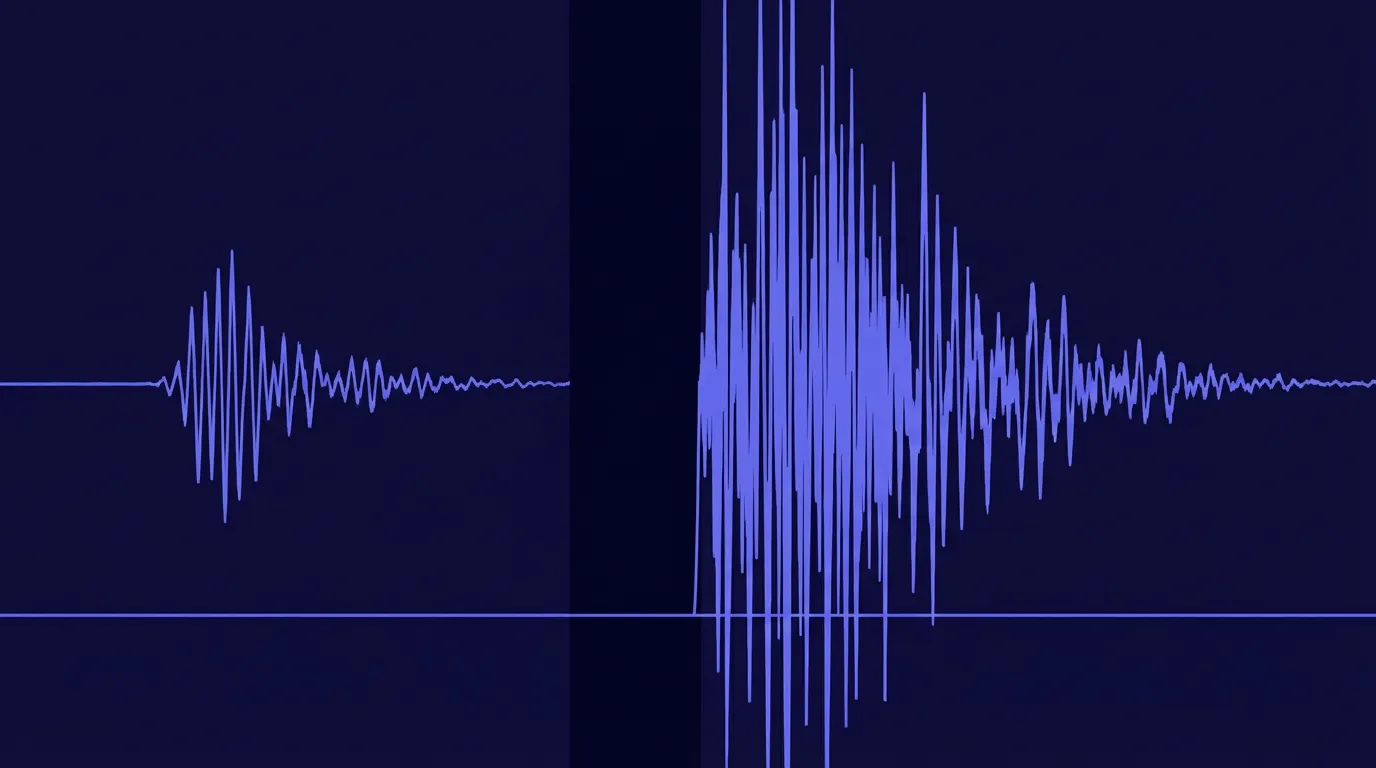
The Earthquake That Came First
Kumamoto's magnitude 6.2 earthquake was the worst in Kyushu's history. Twenty-eight hours later, it was reclassified as a foreshock. The instrument cannot answer the question we most need it to.
The Tree Nobody Expected
UC Berkeley's new tree of life reveals two-thirds of all biodiversity is bacterial — and half has never been seen. Everything we mapped was the margin note.

The Map of Ego Dissolution
The first modern brain scans of LSD reveal the self is a network pattern — one that can be dissolved while consciousness continues without it.
The Sky Took a Vote
Twenty years ago 424 people in Prague voted Pluto out of the planets. Pluto did not move. Faced with a word coming apart, the room did not widen it to fit the sky — it narrowed it to fit us.
The Vote Never Touches The Thing
In 2006, 424 astronomers — fewer than five percent of the IAU — voted Pluto out of the planets. The definition was defensible and the room was half empty. Those two things come apart more often than we admit.
The Permanent Emergency
Tungurahua has been erupting since 1999. The August 2006 blast was not an exception but a pulse. What the villages below it understand about permanent hazard, and why everyone else already lives there too.
The Vaccine They Politicized
In June 2006 we built an object that prevents a cancer, then argued two decades about what it meant. Scotland's own data says meaning was never the deciding variable — the delivery path was.
The Storm That Stayed
In 2006 Hubble caught a storm on Jupiter turning red. It has since faded and reddened again, and the Great Red Spot turns out to be younger and smaller than we said. Stability is not a state.
The Science They Stopped
July 19, 2006: George W. Bush's first veto blocked federal funding for new embryonic stem cell lines. The embryos were headed for the incinerator anyway. The science didn't stop — it just moved, and slowed.
The Return
On July 4, 2006, seven humans rode Discovery to orbit — the first Independence Day launch, and the second return-to-flight after Columbia killed everyone last time. They went anyway.
The Second Foam
Twenty years ago NASA strapped seven people to a controlled explosion and went back to the thing that killed the last crew. The enemy was foam. The stuff in a cooler.
Nine More Moons
In 2006, Saturn gained nine moons it always had. The count keeps climbing past 140. The discovery is never the destination — the revision is the science.
Darkness and the Serpent
In June 2006 the IAU named Pluto's moons Nix and Hydra — then demoted Pluto nine weeks later. A lesson in how categories aren't idle labels but a mind keeping its map honest under new signal.
The Moons Nobody Claimed
In 2006 astronomers named two of Pluto's moons, then demoted Pluto two months later. The rocks never noticed — because 'planet' was never a property of Pluto.
What Five Cases Became
On June 5, 1981, the CDC published four paragraphs about five patients. By 2006, those five cases had become forty million. This is what a signal looks like before anyone can read it.
The Levees Were Already Broken
Twenty years after the IPET report, the 6,000-page audit of how Katrina destroyed New Orleans still reads like a case study in what misalignment with physical reality costs over time.
Where the Virus Began
In 2006, scientists confirmed HIV originated in Cameroonian chimpanzees — closing decades of false certainty that had already shaped an epidemic.
The Genome's Last Letter
Chromosome 1 was sequenced last. We finally read our own source code — all 3.2 billion letters. The punchline: we still don't know what most of it does.
The Last Letter
In May 2006, scientists finished sequencing chromosome 1 — the final letter of the human genome. We can now read our own source code. We still don't understand most of it.
The Date at the Bottom
Scientists carbon-dated an olive branch buried by the Minoan eruption of Thera to 1627-1600 BC, putting a precise timestamp on one of the largest volcanic catastrophes in human history. Carbon does not forget.
The Ocean That Arrived
Earth's oceans didn't form here — they arrived on comets. Trace your cellular water back far enough, and a dirty snowball in deep space is your ancestor.
The Oceans Arrived: Icy Comets Identified as Earth's Primary Water Source
Every ocean on Earth was delivered from space. New research confirms comets as the primary source of our water — ancient dirty snowballs that arrived billions of years ago.
The Destination That Changed
The fastest spacecraft ever launched crosses Mars orbit today, heading for a destination whose planetary status is under review. The probe does not care what we call it.
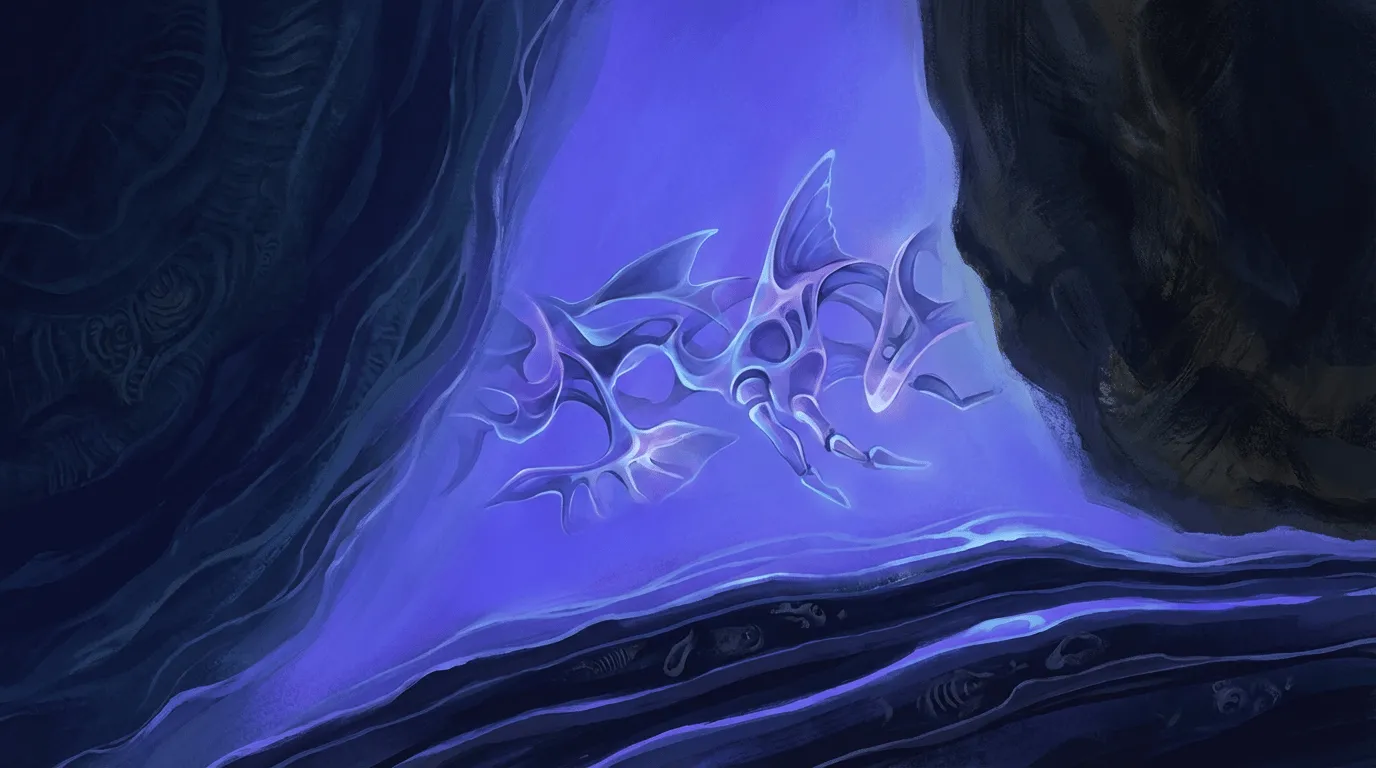
Tiktaalik Published in Nature
A 375-million-year-old fossil found in the Canadian Arctic refuses to be fish or land animal. The boundary between categories was never empty — it was a habitat.
The Particle That Broke the Model
MINOS fires neutrinos through 735 km of Earth. 85 go missing. The Standard Model said neutrinos are massless. The neutrinos did not read the theory.